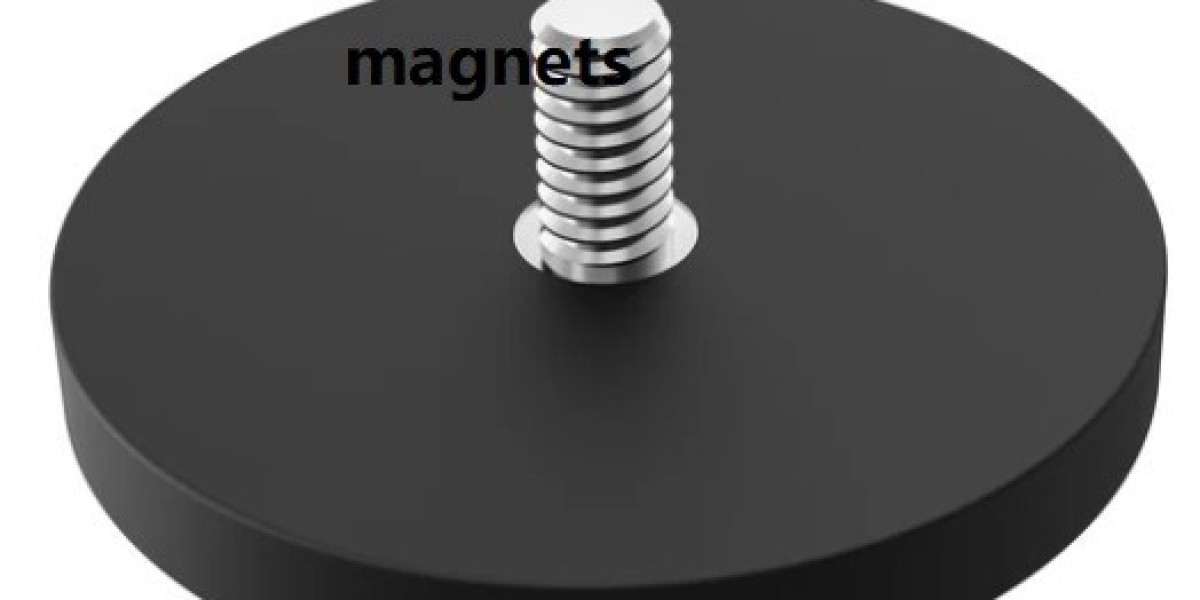

Selecting magnetic components involves more than matching a product's shape to an available space. Engineers must consider functional requirements, assembly constraints, operating environments, and maintenance expectations before finalizing a design. A Round Permanent Magnet may suit products that rely on magnetic attraction for positioning, fastening, or controlled interaction between parts. Evaluating a Round Permanent Magnet within the intended application helps manufacturers understand its role in the complete system, identify potential compatibility issues, and establish specifications that support practical production decisions.
Understanding Magnetic Requirements Before Purchasing
Every magnetic application has its own performance priorities. A closure mechanism may require enough attraction to keep two surfaces together, while a fixture may depend on repeatable positioning during routine operations. Some designs use magnetic interaction to simplify the movement of a component without introducing complicated mechanical connections.
Before purchasing, product teams should define the required function and the conditions under which it will operate. Relevant questions include how far apart the interacting surfaces will be, whether the magnet will remain stationary, and whether users need to separate connected parts regularly. These details help narrow the selection and prevent unnecessary spending on specifications that do not contribute to the intended function.
Assessing Fit Within the Complete Product
A magnet must work with the surrounding structure rather than operate as an isolated component. Its diameter and thickness should match the mounting cavity, while the design must provide sufficient room for any adhesive, holder, or protective cover. Engineers should also check how nearby metal parts influence the magnetic circuit.
Dimensional compatibility becomes especially important in compact equipment, where small differences may affect assembly or interfere with moving components. Reviewing three-dimensional models and physical prototypes can help reveal potential conflicts before production begins. If several parts interact magnetically, their relative positions and orientations should be tested together to confirm that the complete arrangement behaves as intended.
Comparing Material and Handling Requirements
Ferrite is commonly used for permanent magnets in applications where economical magnetic performance and useful corrosion resistance are important. However, ferrite is relatively brittle, so mechanical protection should be part of the product design. A magnet may be damaged by impact, uneven pressure, or repeated contact with hard surfaces during handling.
The surrounding environment should also be considered. Temperature changes, vibration, moisture, and nearby materials may influence the performance or durability of the complete assembly. Protective housings and suitable mounting methods can help reduce mechanical risks. Rather than assuming that one material suits every application, manufacturers should compare component characteristics with the actual demands of the finished product.
MLmagnet and the Value of Application Testing
A successful magnetic design depends on how well the component performs in its intended environment. Before confirming an order, manufacturers can test samples in the actual product or a representative prototype. This allows engineers to observe magnetic interaction, assembly convenience, and any interference with nearby parts.
Testing should reflect normal operating conditions rather than relying only on a quick bench check. For instance, a component used in a motor or actuator may require evaluation alongside coils and moving structures, while a magnetic holder may need repeated attachment and release trials. Clear test criteria help teams compare results objectively and decide whether the selected configuration meets their requirements.
Coordinating Supply and Quality Expectations
A consistent supply process starts with clear communication between the buyer and manufacturer. Technical drawings, material preferences, required quantities, and inspection expectations should be agreed upon before production. If a project has special packaging or handling needs, these should also be discussed in advance.
Quality checks can include dimensional measurements, visual inspection, and functional verification where appropriate. Since ferrite magnets can chip under impact, protective packaging and careful handling are important throughout storage and transportation. Maintaining records of approved samples and specifications can also help purchasing teams evaluate repeat orders and resolve discrepancies more efficiently.
Selecting the right magnetic component is a balance between function, fit, production requirements, and service conditions. By testing realistic assemblies and setting clear quality expectations, manufacturers can make more confident decisions for new product development. To explore permanent magnet options and discuss project requirements, visit https://www.mlmagnet.com .